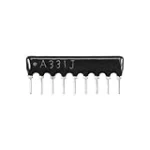
Selecting the correct integrated circuit (IC) plugs is crucial for ensuring the reliability and longevity of electronic projects. The right choice prevents signal degradation, simplifies prototyping, and facilitates maintenance, ultimately saving time and resources. Understanding the various types and features available is key to making an informed decision that meets your specific application needs.

- Dip ic sockets kit
- Pitch: 2.54 mm
- Row to row distance: 7.5 mm
- Package quantity: 150 pieces

- DIP IC Sockets Adaptor Solder Type Socket Kit 6 8 14 16 18 20 24 28 Pin DIP-6 DIP-8 DIP-14 IC Connector
- Wide Application: Great for wire connecting in the field of Automotive, electrical appliances and Internet, especially for the computer and breadboard.
- DWEII pin headers are made of insulated plastic and hard metal pin, strong and durable, the pins are not easy to break can be used for long times.
- 2.54mm/0.1 inches; Number of Pins: 6/8/14/16/ 18/20/24/28 ; Row Type: double row.

- Complete Assortment Kit: This set includes 155 DIP IC sockets of 8 different sizes, classified in a multi-grid plastic box for easy storage and retrieval
- Package Contents: 6 pin x 30pcs, 8 pin x 30pcs, 14 pin x 15pcs, 16 pin x 15pcs, 18 pin x 20pcs, 24 pin x 15pcs, 28 pin x 15pcs, 40 pin x 15pcs, totaling 155 pieces
- Durable Construction: Pin heads are made of insulated plastic and hard metal pins, which are sturdy and durable with pins that are not easily broken for long-term use
- Technical Specifications: Product spacing of 2.54mm/0.1 inches with pin counts of 6/8/14/16/18/24/28/40 in double row configuration

- Dip ic sockets kit, 66pcs dip ic sockets in 8 different size
- DIP IC sockets solder type adaptor pin pitch: 2.54mm/0.1 inches; Number of Pins: 6/8/14/16/18/24/28/20 ; Row Type: double row
- Pin headers are made of insulated plastic and hard metal pin, strong and durable, the pins are not easy to break can be used for long times
- With the IC socket, the chip can be plugged directly without the need to use an electric soldering iron for dissoldering, making it easy to replace

- ♛【What You Get】: This set include 122pcs dip ic sockets in 8 different size, which are they are sorted packed in a plastic box for easy storage and avoid mess.
- ♛【Package Detail】: 6pinx25pcs, 8pinx25pcs, 14pinx12pcs, 16pinx30pcs, 18pinx12pcs, 24pinx12pcs, 28pinx12pcs, 40pinx12pcs, total 122pcs.
- ♛【Product Material】: Our pin headers are made of insulated plastic and hard metal pin, strong and durable, the pins are not easy to break can be used for long times.
- ♛【Products Spacing】: 2.54mm/0.1 inches; Number of Pins: 6/8/14/16/ 18/24/28/40 ; Row Type: double row.

- Complete Assortment Kit: This set includes 75 DIP IC sockets of 8 different sizes, classified in a multi-grid plastic box for easy storage and retrieval
- Durable Construction Material: Pin heads are made of insulated plastic and hard metal pins, which are sturdy and durable, with pins that are not easily broken and can be used for a long time
- Standard Pin Configuration: Features 2.54mm/0.1 inches spacing with pin options of 6/8/14/16/18/20/24/28 pin double row configuration for versatile electronic applications
- Versatile Application Range: These dual in-line IC sockets are suitable for installation on PCB boards and are appropriate for wiring in the fields of automobiles, electrical appliances and the internet, especially computers and breadboards
This article is part of our complete guide Electronics & Computing — browse all our comparisons and buying guides.
Last update on 2026-11-22 / Affiliate links / Images from Amazon Product Advertising API
How to Choose the Best IC Plugs
Understanding Different Types of IC Plugs
IC plugs, also known as sockets, serve as crucial intermediaries between integrated circuits and printed circuit boards (PCBs). They come in various forms, each designed for specific IC packages and applications. Dual In-line Package (DIP) sockets are among the most common, featuring two parallel rows of pins. Single In-line Package (SIP) sockets have a single row. Pin Grid Array (PGA) sockets are used for ICs with pins arranged in a square grid, while Plastic Leaded Chip Carrier (PLCC) sockets accommodate surface-mount PLCC packages, often with a lever for easy insertion and extraction. Understanding these basic types is the first step in identifying the right fit for your components.
Essential Features and Specifications
- Pin Count and Pitch: The number of pins must precisely match your IC, and the pin spacing (pitch) is equally critical for proper alignment. Standard pitches are often 2.54mm (0.1 inch).
- Contact Material and Plating: Contacts are typically made from brass or beryllium copper. Plating options include tin or gold. Gold plating generally offers superior conductivity, corrosion resistance, and a higher number of insertion cycles, making it ideal for critical or frequently swapped components. Tin plating is more economical and suitable for less demanding applications.
- Body Material: The insulating body is commonly made from high-temperature plastics like PBT (Polybutylene Terephthalate) or PPS (Polyphenylene Sulfide), which provide electrical isolation and mechanical stability.
- Insertion Force: Zero Insertion Force (ZIF) sockets are designed for easy IC insertion and removal without bending pins, using a mechanical lever to secure the IC. Standard sockets require more force but are generally more compact and cost-effective.
- Temperature Rating: Ensure the plug's operating temperature range is compatible with your application's environment to prevent material degradation or performance issues.
Ensuring Compatibility and Application Fit
Compatibility extends beyond just pin count. Always verify the physical dimensions of the plug against the available space on your PCB. Consider the mounting style: through-hole sockets require holes in the PCB, while surface-mount sockets are soldered directly to pads. For high-frequency applications, look for plugs designed to minimize signal integrity issues, such as those with low capacitance and inductance. The specific environment, whether industrial, consumer, or automotive, will also dictate requirements for robustness, vibration resistance, and chemical exposure.
Evaluating Durability and Performance
The lifespan of a connector is often measured by its number of mating cycles—how many times an IC can be inserted and removed before performance degrades. Gold-plated contacts typically offer a higher number of cycles. Consider the mechanical stability of the plug; a robust design will prevent the IC from becoming loose due to vibration or shock. Look for specifications regarding contact resistance, which should be low to ensure efficient power and signal transmission. A higher quality plug will maintain its electrical and mechanical integrity over time, reducing the need for costly replacements or repairs.
Smart Comparison Tips for Optimal Selection
When comparing different options, start by clearly defining your project's technical requirements, including pin count, pitch, electrical characteristics, and environmental conditions. Prioritize features based on your application's needs; for example, ZIF sockets are excellent for development boards, while standard sockets are suitable for production. Read product specifications carefully, paying close attention to contact plating, body material, and temperature ratings. Always check user reviews for feedback on ease of use, durability, and reliability. Sometimes, a slightly higher initial investment in a quality connector can prevent significant issues down the line, ensuring long-term performance and peace of mind.