Cookies and audience measurement
We use Google Analytics to measure how the site is used and to improve our content. It only loads with your consent: you can decline at no cost and change your mind at any time. Privacy policy
This post contains affiliate links. As an Amazon Associate we earn from qualifying purchases. Our picks are based on Amazon bestseller rankings, Amazon customer ratings, and product availability. We update our recommendations regularly to ensure accuracy.
Gas chromatography (GC) is a powerful analytical technique used across many industries for separating and analyzing compounds. The quality and purity of the reagents used directly impact the accuracy and reliability of your GC results. Selecting the correct GC reagents is therefore crucial for obtaining precise and reproducible data in your laboratory.
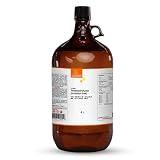
Designed for HPLC Applications: Manufactured to meet High-Performance Liquid Chromatography standards, this solvent delivers stable baselines, low UV absorbance, and reliable reproducibility for both qualitative and quantitative analyses
Exceptional 99.90% Purity: LiChrom Tetrahydrofuran offers extremely high purity with 99.90% assay confirmed by gas chromatography, ensuring consistent performance, accurate results, and minimal interference in chromatography and analytical applications
Inhibitor Free for Reliable Performance: This inhibitor-free solvent provides unaltered chemical properties, making it suitable for sensitive chromatography and synthesis work with carefully controlled formulation to prevent impurities
Convenient 4-Liter Laboratory Packaging: The durable 4-liter container is designed for safe storage, easy handling, and efficient dispensing in laboratory environments
【Durable Glass Bottle】HPLC vials have heat resistance and high chemical resistance and are suitable for accommodating reagents with acidic, neutral, and alkaline pH values
【Sealed Design】Lab vials feature a unique screw design that ensures a consistent seal. Silicone septa and PTFE provide an evaporation-tight seal for compound sample storage in the chemical industry and research laboratories
【Easy to Distinguish】This vial has white printed graduations in 1ml increments and a large writing area for sample identification or labeling.
【Screw Vials】Our 4ml HPLC vials are 14.4mm in diameter and 45mm in height, which is suitable for common autosampler.
Specification: Capacity: 10 ml; Scale Graduation: 2.5 ml; Bottle Size: 75 x 22.5 mm/3 x 0.9 Inch (H*OD); Bottle Mouth Inner Diameter: 11.7 mm/0.5 Inch Cap Size: 11 x 18 mm/0.4 x 0.7 Inch; Color: Clear(Bottle); Silver(Cap); Material: High Borosilicate...
Application: The Headspace Vial is widely used for gas analysis and headspace analysis, and headspace analysis of solids and gases.
Advantage: The reagent bottles are crafted from durable borosilicate glass, known for its ability to withstand extreme temperatures, superior chemical resistance, low expansion coefficient, and resilience against breakage and deformation. They are...
Instruction: Transparent color allows you to identify the reagent easily. The bottle's graduation and white blank area are great for sample identification or labeling.
SUPERIOR PURITY: Ultra-refined n-Decane ensures maximum purity and minimal impurities for consistent, reliable performance
VERSATILE APPLICATIONS: Suitable for chromatography, liquid-liquid extraction, synthesis, and more, catering to diverse laboratory and industrial needs
ENHANCED STABILITY: Exceptional chemical stability ensures long-term storage without degradation, maintaining product integrity over time
PRECISE FORMULATION: Engineered for precise measurements, facilitating accurate dosing and reproducible results in every experiment or process
Last update on 2026-11-16 / Affiliate links / Images from Amazon Product Advertising API
How to Choose the Best Lab Chromatography GC Reagents
Purity and Grade
Purity: High purity levels are essential for GC reagents to prevent interference with sample analysis and ensure accurate detection. Look for reagents with stated purity percentages, often 99% or higher for critical applications.
Grade: Different grades cater to specific analytical needs. HPLC, GC, and Spectrophotometric grades offer varying levels of purity and suitability for different detection methods. Ensure the grade matches your GC system and analytical requirements.
Application Specificity
Solvents: Choose solvents that are compatible with your GC system and sample matrix. Consider factors like boiling point, polarity, and potential for reactivity.
Standards: Certified reference materials (CRMs) are vital for calibration and quantification. Ensure the standards cover the compounds you need to analyze and are traceable to national or international standards.
Frequently Asked Questions
What is the difference between GC grade and HPLC grade solvents?
GC grade solvents are specifically purified and tested for use in gas chromatography, minimizing contaminants that could interfere with sensitive detectors. HPLC grade solvents are purified for high-performance liquid chromatography and may have different specifications, though some can be suitable for GC if purity requirements are met.
How important is the purity of GC reagents?
Reagent purity is paramount in gas chromatography. Impurities can lead to ghost peaks, baseline noise, and inaccurate quantification, compromising the integrity of your analytical results. Always opt for the highest purity grade suitable for your specific application.
Can I use a general laboratory solvent for GC analysis?
While some general lab solvents might appear pure, they often contain trace impurities that can significantly affect GC performance. It is highly recommended to use solvents specifically designated as GC grade to ensure reliable and reproducible results.
What are certified reference materials (CRMs) for GC?
CRMs are materials with one or more property values that are established with associated measurement uncertainty, obtained by measurement, using a metrological traceable reference standard. For GC, CRMs are used to calibrate instruments and validate analytical methods, ensuring accuracy in identifying and quantifying substances.
As an Amazon Associate, we earn from qualifying purchases. Product prices and availability are accurate as of the date/time indicated and are subject to change.
Amazon pricing is not included in price tracking/graph. We do not issue alerts for any products through Amazon.