As an Amazon Associate, we earn from qualifying purchases. Check the exact model, current price and availability with the retailer before buying.
Most people in the United States get enough molybdenum from food, according to the NIH Office of Dietary Supplements. Before you buy a bottle, check whether you already take a multivitamin that lists it. If a health professional has asked you to look at a particular product, bring the Supplement Facts panel so you can discuss the exact amount and ingredients. We compared the options using published documentation. See the sources.
Choose by use
- Food and your current routineFor someone who wants to check whether a new supplement is needed.
- A multivitamin label you already useFor someone checking whether another product would duplicate an ingredient.
- A single-mineral molybdenum labelFor discussing a specific standalone product with a clinician or pharmacist.
Compare the three options
Scroll horizontally to compare all columns.
| Food and your current routine | A multivitamin label you already use | A single-mineral molybdenum label | |
|---|---|---|---|
| What you compare | Usual foods and products already in use | Molybdenum line on an existing multivitamin | Molybdenum line on a standalone bottle |
| First check | Beans, lentils and other regular foods | Exact formula, country and serving size | Amount in micrograms per stated serving |
| What the number tells you | Intake varies with food and growing conditions | Amount included in one labeled serving | Amount in that product alone |
| What to do with the result | Consider whether a purchase has a clear purpose | Check for duplication across your labels | Discuss the product if there is a specific reason to consider it |
Compare compatibility and trade-offs for your use. See sources and methodology
Options and trade-offs
Food and your current routine
For someone who wants to check whether a new supplement is needed.
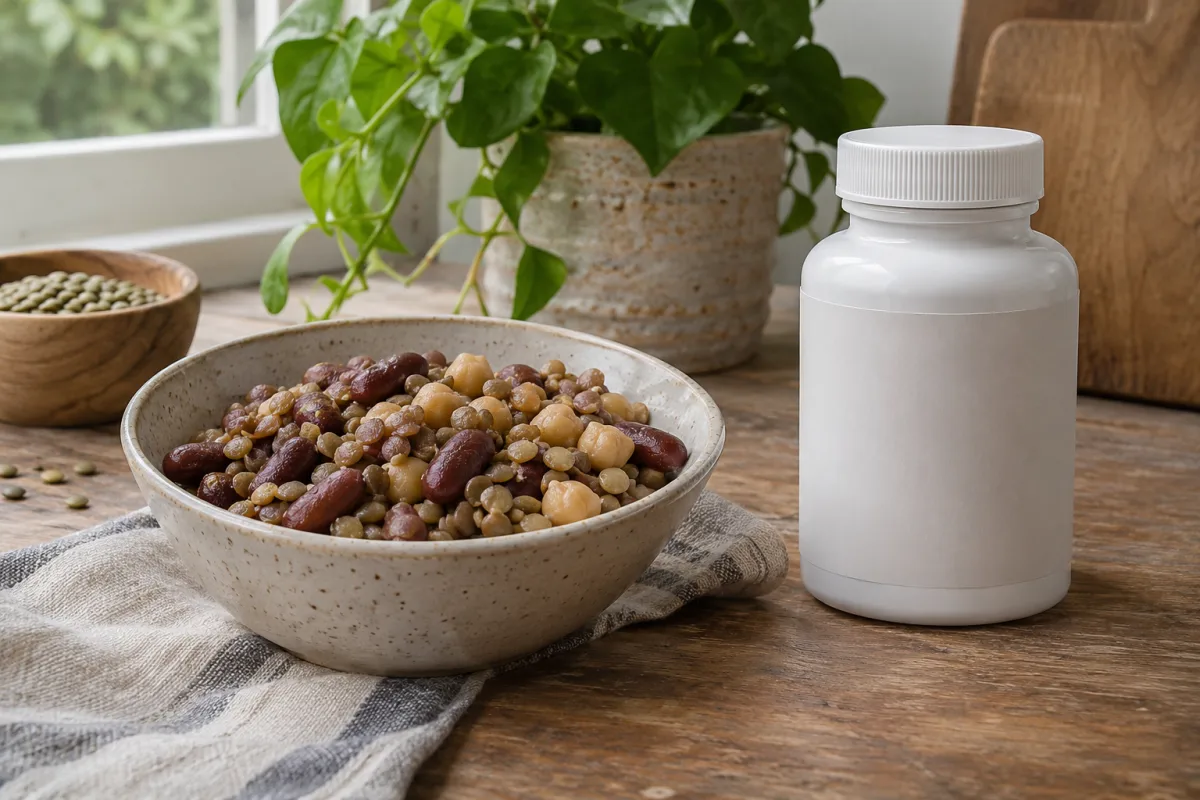
Beans, lentils and other foods provide molybdenum. NIH says typical US diets usually provide enough, and deficiency is very rare.
Keep in mind A food list cannot resolve an individual nutrition concern. Ask a health professional if you have a specific reason to suspect an intake problem.
A multivitamin label you already use
For someone checking whether another product would duplicate an ingredient.
Centrum Adults tablets provide one example of a multinutrient panel with a separate molybdenum line. The panel lists molybdenum alongside other minerals, so read the whole serving and ingredient list.
Keep in mind Formulas differ by product and market. Read the label on your own bottle, including its serving size, rather than relying on the brand name.
A single-mineral molybdenum label
For discussing a specific standalone product with a clinician or pharmacist.
Solgar Chelated Molybdenum Tablets list 150 mcg of molybdenum and 333% Daily Value per tablet. The two figures describe the same serving, using an amount and a reference percentage.
Keep in mind A value over 100% is a label comparison. It does not establish that you need the product or that the form works better.
NIH molybdenum evidence summary
Check where molybdenum is already coming from
NIH lists legumes such as beans and lentils among food sources. Amounts in foods vary with soil and irrigation, so a single food figure cannot determine what you usually get. Start by checking your overall diet and any supplement panels you already have. [1] [2]
Add up the amount shown on your labels only when you understand what each serving includes. Distinguish micrograms, abbreviated mcg, from milligrams, abbreviated mg. Read the serving-size line before comparing the numbers or counting two products as separate sources. [2] [3] [4] [5]
Read amount, form and Daily Value separately
US labels use a 45 mcg Daily Value for molybdenum for adults and children aged 4 years and older. The Daily Value is a common reference for comparing products. Age and life stage can affect individual nutrition needs. [1] [2] [3]
Molybdenum may appear as a chelate or another form. NIH notes there are no studies comparing the relative bioavailability of the supplementary forms. Treat the form as an ingredient detail and ask for direct evidence before paying extra for an absorption claim. [2] [5]
Decide what would justify adding a product
An established nutritional role does not establish a reason to buy a standalone supplement. If your concern is a particular symptom, medication or health condition, take that question and your full product list to a clinician or pharmacist. [1] [2] [6]
FDA does not approve supplements for safety and effectiveness before sale. Look at the full ingredient panel and ask what evidence supports any claim about the exact product. A label entry tells you what the manufacturer reports per serving. [3] [5] [6]
Common buying questions
Does everyone need a molybdenum supplement?
NIH reports that most people in the United States obtain enough through foods and that deficiency is rare. Check existing products and discuss a specific concern with a health professional before buying. [1] [2]
What does 333% Daily Value mean on a molybdenum label?
In this Solgar example, 150 mcg per labeled tablet corresponds to 333% of the US 45 mcg reference. The percentage helps compare the amount with the reference. [2] [3] [5]
Can I compare a chelated supplement with a multivitamin?
Yes. Compare the amount of molybdenum in mcg per labeled serving. Read the form and the complete ingredients separately, since the products can include different minerals and additives. [2] [3] [4] [5]
Sources and methodology
The comparison uses US public guidance and manufacturer labels. The example label amounts describe the products. See how we compare products.
- NIH Office of Dietary Supplements molybdenum fact sheet. Food sources, typical intake and overview of supplements.
- NIH molybdenum evidence summary. US Daily Value, forms, evidence on absorption and excess intake context.
- FDA Supplement Facts labeling guide. US rules for serving size, amount, forms and Daily Value on labels.
- Haleon Centrum Adults tablets label. Manufacturer’s US Supplement Facts example for a multinutrient product.
- Solgar Chelated Molybdenum label. Manufacturer’s amount, form and Daily Value per tablet.
- FDA dietary supplement questions and answers. Premarket responsibilities and consumer information.
This article is part of our complete guide Vitamins & Supplements — browse all our comparisons and buying guides.
Before you choose
Compare specifications for the exact model and variant. Consider the dimensions, compatibility and maintenance that matter to your use. Customer ratings and product listings are different from independent hands-on testing.