Exploring the Physics of Gravity involves understanding fundamental forces that shape our universe, from basic principles to advanced quantum theories. These resources cater to various learning styles, whether through in-depth academic texts or interactive science kits for hands-on discovery. Products were evaluated based on their depth of content, target audience suitability, learning approach, user reviews, and feature analysis.
Top picks
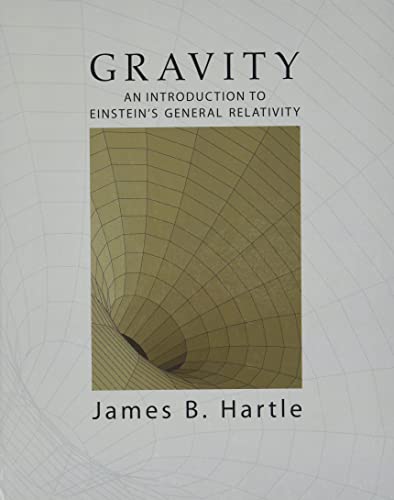
Gravity: An Introduction to Einstein's General Relativity
This book offers a rigorous and comprehensive academic foundation for understanding general relativity, suitable for serious students of physics.
View on Amazon
Gravity: A Very Short Introduction
Providing a concise yet thorough overview, this introduction makes complex gravitational concepts accessible without requiring extensive prior knowledge.
View on Amazon
Reality Is Not What It Seems: The Journey to Quantum Gravity
This work delves into cutting-edge theoretical physics, exploring the frontiers of current understanding in the quest for quantum gravity.
View on Amazon


- Fascinating Physics Gyroscope Toy Design: This newly upgraded mechanical gyroscope toy features almost no noticeable base shaking during rotation. Its enhanced design enables ultra-long and stable spinning—simply wrap the rope around the shaft a few...
- Premium & Durable Metal Material: Crafted with a bright golden yellow metal frame, 304 stainless steel shaft (with a precision of 0.05mm), and a gold-plated inertial flywheel. The shaft features a smooth, burr-free surface that ensures balanced rotation...
- Educational & Intellectual Physics Toy: The "anti-gravity" effect displayed by the spinning gyroscope deeply captivates teenagers and adults, effectively stimulating interest in exploring physics and science. It serves as an excellent teaching tool to...
- Compact, Portable & Space-Saving: The gyroscope is small and lightweight, easily fitting on desktops, palms, or any stable surface. It does not take up much space, making it playable at home, in the office, or during travels. It can kill time, relieve...

- SET OF 2 BALANCE BIRDS: Includes two gravity balance eagle figures, perfect for sharing or displaying as a matching pair.
- PHYSICS DEMONSTRATION: Showcases the fascinating principles of center of gravity and balance, making it a fun and engaging science learning tool.
- EDUCATIONAL & ENTERTAINING: Ideal as a science kit for kids and adults alike, sparking curiosity about physics concepts in a hands-on way.
- OFFICE DESKTOP NOVELTY: A unique and eye-catching desk toy that provides a relaxing, stress-relieving distraction during work or study breaks.

- Learn Physics Through Engaging Comics:Physics in a Minute Comic Book Edition turns complicated physics theories into fun, easy-to-follow comic stories. Vibrant illustrations and simple dialogues help kids grasp core physics ideas without boring...
- Kid-Friendly STEM Physics Introduction:Perfect for young learners. This educational physics book covers foundational concepts including gravity, motion, light, sound and energy. It sparks children’s curiosity about science and builds solid STEM...
- Short & Digestible Knowledge for Focused Reading:Designed with the “a minute per topic” reading style. Each physics lesson is concise, letting kids finish one concept quickly. Great for independent reading, homeschool practice and parent-child...
- Great Gift for Science-Loving Boys & Girls:An awesome gift choice for birthdays, holidays or back-to-school. It works well for reluctant readers who dislike traditional science books, mixing entertainment and education to keep kids engaged.


- hands-on and visual|acclaimed and trusted|great for classrooms|Entertain and educate at the same time|Have appealing child-centered topics|Developmentally appropriate for emerging readers|Focused; answering questions instead of using survey...


- Comprehensive Physics Mechanics Lab Equipment: This complete 26-experiment kit includes professional tools like a tray balance, pulleys, lever ruler, U-tube pressure gauge, spring dynamometer, trolley, and ramp. Designed for hands-on mechanics...
- Supports Core Classical Mechanics Experiments: This multi-functional kit covers essential physics concepts, including Newton's Laws, kinematics, and gravity. It enables hands-on research on force balance, friction, pressure, and buoyancy. Perfect for...
- Practical Classroom Teaching Aids: Tailored for middle and high school physics, this kit turns abstract theories into intuitive, verifiable results. Ideal for interactive classes and lab teaching, it simplifies complex mechanics concepts, helping students...
- Versatile Hands-On Science Learning Tool: Designed for independent physics study, this kit includes a detailed professional manual with complete operation steps and principle analysis. It helps students explore mechanics through hands-on practice, develop...
This article is part of our complete guide Books & Media — browse all our comparisons and buying guides.
Last update on 2026-11-22 / Affiliate links / Images from Amazon Product Advertising API
How to Choose the Best Physics of Gravity
Target Audience and Complexity
When selecting resources on the Physics of Gravity, the intended audience is a primary consideration. For younger learners or those seeking an introductory, hands-on experience, kits like the 4M Kidzlabs Anti Gravity Magnetic Levitation Science Kit are specifically designed to introduce concepts through engaging experiments. This kit, for example, allows children to float a pencil or build a maglev, concretely demonstrating magnetic forces related to 'anti-gravity' phenomena. Conversely, academic texts such as Cambridge University Press's "Gravity: An Introduction to Einstein's General Relativity" are tailored for university-level students or advanced enthusiasts, requiring a solid foundation in mathematics and physics. Users report that attempting to engage with advanced material without the necessary background can be discouraging, making audience alignment crucial.
Scope and Depth of Content
The breadth and depth of content vary significantly across different products. Some books provide a broad, accessible overview, such as Oxford University Press's "Gravity: A Very Short Introduction", which aims to distill complex topics into a concise format for general readers. This is ideal for gaining a foundational understanding without getting bogged down in intricate derivations. For those seeking to explore the very edge of theoretical physics, titles like Riverhead Books' "Reality Is Not What It Seems: The Journey to Quantum Gravity" delve into highly speculative and advanced concepts, pushing beyond classical general relativity into the realm of quantum mechanics. The main difference is whether a product focuses on established principles or explores ongoing research and unanswered questions.
Learning Modality and Engagement
The method through which information is conveyed significantly impacts learning effectiveness. Traditional textbooks from publishers like Cambridge University Press typically rely on detailed explanations, mathematical formulations, and diagrams, requiring a self-driven, analytical approach. This modality is effective for structured learning and deep theoretical understanding. In contrast, the 4M Kidzlabs Anti Gravity Magnetic Levitation Science Kit emphasizes experiential learning, where concepts like magnetic force are understood by actively manipulating physical components. For some learners, especially younger individuals or those who prefer kinesthetic learning, the practical application of principles through experiments can solidify abstract ideas more effectively than purely textual exposure.
Pros & Cons
Reality Is Not What It Seems: The Journey to Quantum Gravity
Pros
- Explores cutting-edge concepts in quantum gravity, pushing the boundaries of current scientific understanding.
- Offers a philosophical and historical perspective on the development of gravitational theories.
- Written by a prominent theoretical physicist, providing authoritative insights into complex topics.
Cons
- The advanced nature of the subject matter may be challenging for readers without a strong physics background.
- Focuses heavily on theoretical frameworks, potentially lacking practical applications or simpler explanations.
Gravity: An Introduction to Einstein's General Relativity
Pros
- Provides a rigorous and comprehensive introduction to Einstein's General Relativity, suitable for academic study.
- Structured like a textbook, typically including detailed derivations and problem sets for thorough learning.
- Published by a reputable academic press, ensuring high standards of accuracy and scholarship.
Cons
- Demands a significant commitment of time and prior mathematical knowledge to fully grasp the material.
- The density of information can feel overwhelming for casual readers or those seeking a light introduction.
4M Kidzlabs Anti Gravity Magnetic Levitation Science Kit - Maglev Physics Stem Toys Educational Gift for Kids & Teens, Girls & Boys (3686)
Pros
- Offers hands-on experiments, making abstract physics concepts tangible and engaging for children.
- Includes all necessary materials for immediate use, simplifying the setup for educational activities.
- Effectively demonstrates principles of magnetic force and levitation, which are often confused with 'anti-gravity'.
Cons
- Primarily focuses on magnetic levitation, which is distinct from gravitational physics, potentially misleading on the core topic.
- Limited in its scope to fundamental magnetic principles, it does not delve into the complexities of gravitational theory.
Common Mistakes to Avoid
Overestimating the Reader's Background Knowledge
A frequent error is selecting a resource that assumes a higher level of prior knowledge than the reader possesses. For instance, choosing "Gravity: An Introduction to Einstein's General Relativity" by Cambridge University Press for someone new to physics will likely lead to frustration. This text is designed for students with a solid foundation in calculus and classical mechanics. Users often report that jumping directly into such advanced material without prerequisite understanding can make the subject seem impenetrable, hindering rather than helping comprehension.
Confusing Magnetic Levitation with True Anti-Gravity
Another common mistake involves misinterpreting the demonstrations offered by certain products. The 4M Kidzlabs Anti Gravity Magnetic Levitation Science Kit, for example, teaches about magnetic force and levitation. While visually impressive, this is fundamentally different from manipulating the force of gravity itself. Expecting a kit focused on magnetic fields to explain or demonstrate gravitational anti-gravity principles, as explored in theoretical physics books like "Reality Is Not What It Seems: The Journey to Quantum Gravity" by Riverhead Books, will result in unmet expectations.
Selecting a Concise Overview for In-Depth Study
Opting for a 'short introduction' when comprehensive, detailed understanding is required can be a pitfall. While "Gravity: A Very Short Introduction" by Oxford University Press, USA is excellent for gaining a quick, accessible overview, it does not provide the exhaustive detail or mathematical rigor necessary for academic study or deep theoretical exploration. Users aiming for a thorough grasp of the subject, perhaps for a course or advanced personal research, will find its brevity insufficient and may need to supplement it with more extensive works.