Exploring the vast landscape of "Women Writers in Women Studies" involves understanding diverse perspectives and historical contexts. These resources are typically utilized for academic research, enriching personal libraries, or facilitating group discussions on feminist theory and literary analysis. Products were evaluated based on their content focus, author diversity, study format, and overall relevance to contemporary Women's Studies curricula, alongside user reviews and feature analysis.

Black Women Writers at Work
$17.39
This collection offers focused insights into the professional lives and literary contributions of a specific group of influential women writers, aligning well with studies on identity and representation.
View on Amazon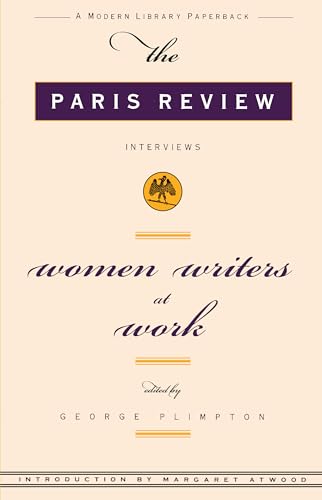
Women Writers at Work: The Paris Review Interviews
$16.46
As a 'Used Book in Good Condition,' this volume provides an accessible entry point into the minds of prominent women writers through classic interviews, offering significant value.
View on Amazon
Black Women Writers at Work
$17.39
Its specialized content on Black women writers provides a critical and in-depth perspective, making it a valuable, focused resource for dedicated academic pursuits within Women's Studies.
View on Amazon


- 【320 Pages Hardcover Thick Notebook】This faux leather journal notebook A5 (5.7'' X 8.4'') size lined notebook journal has a total of 320 pages (including 6 catalog pages), 7mm space classic college ruled notebook, providing you with plenty of writing...
- 【100GSM Premium Paper】The notebook journal is made of 100gsm ivory thick paper, the paper is smooth, the writing is smooth, and the ink will not bleed, suitable for most pens. Our leather notebooks feature a 180° lay-flat design for easy writing...
- 【Notebook Features】The journal has 6 Contents Pages to log more entries, No more worrying about not having enough index pages; 3 Exquisite ribbon bookmarks to help you find content faster; 1 Elastic closure strap to keep the notebook closed...
- 【Great Use】Thick hardcover notebook journal is ideal for office, school and home use, and is a great gift choice for women, men, business executives, college, students and people in many other fields. It can be used as personal writing journal, daily...


This article is part of our complete guide Women's Clothing — browse all our comparisons and buying guides.
Last update on 2026-10-19 / Affiliate links / Images from Amazon Product Advertising API
How to Choose the Best Women Writers in Women Studies
Understanding Content Focus and Academic Rigor
When selecting resources for Women Writers in Women Studies, the primary content focus is paramount. Some texts, such as "Strength in the Struggle: A Bible Study Workbook for Women on Letting Go of Fear and Anxiety" or "Jesus and Women: In the First Century and Now," are designed for spiritual growth and personal reflection. While valuable in their own right, these typically do not provide the academic depth or critical literary analysis required for formal Women's Studies. In contrast, works like "Black Women Writers at Work" or "Women Writers at Work: The Paris Review Interviews" offer direct insights into the lives, processes, and perspectives of authors, serving as primary or secondary sources for literary and cultural analysis. Users should consider whether the content leans towards theological exploration or critical literary discourse to ensure it meets their specific study objectives.
Diversity in Authorial Representation
A key aspect of Women's Studies is the exploration of diverse voices and experiences. Products vary significantly in the range of authors they feature. Collections such as "Black Women Writers at Work" specifically highlight African American perspectives, contributing to a nuanced understanding of race and gender in literature. Similarly, titles like "The Woman with the Flying Head and Other Stories (Japanese Women Writers in Translation)" or "In the House of Silence: Autobiographical Essays by Arab Women Writers" introduce readers to non-Western literary traditions and unique cultural insights. A broader collection like "Literary Women: The Great Writers" aims for a more sweeping overview but might lack the specific depth provided by more focused anthologies. In practice, a comprehensive approach often involves integrating texts that address different ethnic, national, and historical contexts to gain a well-rounded understanding of women's contributions to literature globally.
Format and Engagement Features
The format of a product significantly impacts its utility in various study environments. Workbooks, exemplified by "Strength in the Struggle" or "Jesus and Women," are structured for interactive learning, often including prompts, exercises, and even video access for group study. These are highly effective for guided personal development or facilitated discussions. Interview collections, such as "Black Women Writers at Work" and "Women Writers at Work: The Paris Review Interviews," provide direct access to authors' thoughts in their own words, offering a unique qualitative data source for research. Essay collections or literary analyses, like "A Study in Scarlet Women," delve into critical interpretations. Considering whether a resource offers study questions, historical context, or interactive elements is crucial for matching it to individual learning styles or pedagogical needs.
Intended Audience and Depth of Study
Different resources are tailored to distinct audiences, from casual readers to advanced scholars. A title like "Ten Women of the Bible Updated Edition" is typically aimed at a general readership seeking spiritual inspiration, presenting biographical sketches with a devotional slant. Conversely, academic texts or extensive interview compilations are often intended for students and researchers who require in-depth analysis and critical engagement. For instance, while "Having a Mary Heart in a Martha World" focuses on personal spiritual growth, a work like "Literary Women: The Great Writers" provides a more scholarly overview of literary history. Understanding the publisher's target audience and the book's scholarly apparatus (e.g., bibliographies, footnotes) can help determine if it offers the appropriate level of detail and analytical rigor for the intended depth of study in Women's Studies.
Pros & Cons
Strength in the Struggle: A Bible Study Workbook for Women on Letting Go of Fear and Anxiety
Pros
- Provides structured biblical guidance for personal emotional challenges.
- Designed as a workbook, facilitating active engagement and reflection.
- Focuses on practical application of faith to daily life issues.
Cons
- Content is highly specific to Christian spiritual development, not academic Women's Studies.
- Lacks literary criticism or historical analysis of women writers.
Black Women Writers at Work
Pros
- Offers direct, primary source insights into the experiences of Black women writers.
- Contributes to a critical understanding of race, gender, and literary production.
- Valuable for studies on specific demographics within Women's Studies and literature.
Cons
- Focus is specific to Black women, potentially limiting broader scope for general Women Writers studies.
- Interview format might not cover extensive critical analysis of their works.
Women Writers at Work: The Paris Review Interviews
Pros
- Presents timeless interviews with influential women writers, offering historical perspective.
- Provides unique insights into the creative process and intellectual lives of authors.
- Accessible as a 'Used Book,' making it a budget-friendly option for foundational texts.
Cons
- Interviews may be dated, potentially lacking contemporary feminist theoretical frameworks.
- Focuses on interviews rather than comprehensive literary criticism or biographical detail.
Common Mistakes to Avoid
Mistaking Spiritual Guides for Academic Texts
A common pitfall is selecting products primarily focused on spiritual or personal development for rigorous academic inquiry in Women's Studies. For instance, texts like "Strength in the Struggle: A Bible Study Workbook for Women" or "Jesus and Women: In the First Century and Now" are invaluable for faith-based study but do not offer the critical literary analysis, historical contextualization, or theoretical frameworks typically required in a Women's Studies curriculum. Users expecting a scholarly examination of women writers might find these devotional texts misaligned with their academic objectives.
Underestimating the Specificity of Interview Collections
While interview compilations such as "Black Women Writers at Work" and "Women Writers at Work: The Paris Review Interviews" provide compelling primary insights, a frequent mistake is to assume they offer comprehensive literary or biographical overviews. These collections excel at capturing authors' voices and perspectives on their craft and lives, but they are not designed as definitive critical analyses of their entire body of work or their historical impact. They serve best as supplementary material, offering qualitative data rather than exhaustive scholarly review.
Overlooking the Importance of Authorial Diversity and Cultural Context
In Women's Studies, the representation of diverse voices is crucial. Users sometimes default to broadly titled collections without considering the specific cultural and national origins of the writers. For example, relying solely on texts focused on Western authors might lead to missing the rich contributions highlighted in works like "In the House of Silence: Autobiographical Essays by Arab Women Writers" or "The Woman with the Flying Head and Other Stories (Japanese Women Writers in Translation)." Neglecting these specific cultural contexts can result in a less comprehensive and nuanced understanding of women's global literary landscape.