Cookies and audience measurement
We use Google Analytics to measure how the site is used and to improve our content. It only loads with your consent: you can decline at no cost and change your mind at any time. Privacy policy
This post contains affiliate links. As an Amazon Associate we earn from qualifying purchases.
Our picks are based on Amazon bestseller rankings, Amazon customer ratings, and product availability. We update our recommendations regularly to ensure accuracy.
Rigging sheaves are essential components for lifting, pulling, and guiding heavy loads, playing a critical role in safety and efficiency across various industrial applications. Selecting the correct sheave ensures smooth operation, minimizes wear on ropes and cables, and prevents potential equipment failure. This guide will help you navigate the key considerations for choosing the best rigging sheave for your needs.
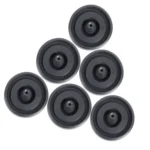
Reasons for Selection - Made of durable nylon, clothesline pulley kit is waterproof and durable, with strong load-bearing capacity, running quietly and smoothly; small in size, lightweight and easy to install. Equipped with a hook that can rotate...
Measurement - Loading Capacity: 5kg / 11lb; Lifting Ring Inner Diameter: 10mm / 0.39 inch; Groove Width: 9mm / 0.35 inch; Total Length: 62mm / 2.44 inch; Total Width: 25mm / 0.98 inch; Packing List: 10 Pcs x Small Nylon Pulley Wheels
Suitable For - Mini plastic pulley wheels are suitable for amateur radio antenna wiring, DIY pulley frame projects, creating small pulley systems, farm greenhouse structures, etc., which are widely used for pulling clotheslines, ropes, pulley cables and...
Installation - Simply secure the pulley wheel to a stable mounting point and thread the rope through the pulley.
Last update on 2026-10-22 / Affiliate links / Images from Amazon Product Advertising API
How to Choose the Best Rigging Sheaves
Understanding Sheave Types
Wire Rope Sheaves: Designed specifically for use with wire ropes, these often feature grooves that match the rope's diameter and construction to prevent crushing and damage.
Fiber Rope Sheaves: Typically have a wider, smoother groove to accommodate the bulk and flexibility of fiber ropes, reducing friction and abrasion.
Swivel Sheaves: Allow the rigging point to rotate, preventing twists in the rope or load during lifting operations.
Fixed Sheaves: Mount directly to a structure and do not rotate, providing a stable redirection point for the rope.
Material Considerations
Steel: Offers high strength and durability, suitable for heavy-duty applications and high loads. It's resistant to impact but can be heavier.
Aluminum: Lighter than steel and corrosion-resistant, making it a good choice for applications where weight is a concern or in marine environments.
Cast Iron: A cost-effective option known for its strength and wear resistance, often used in general industrial settings.
Bronze/Brass: Excellent corrosion resistance and often used in specific environments where non-sparking properties are required.
Sizing and Load Capacity
Groove Diameter and Width: Must be matched to the specific rope or cable diameter being used to ensure proper fit and prevent slippage or damage.
Sheave Diameter: A larger sheave diameter generally reduces bending stress on the rope, extending its lifespan.
Working Load Limit (WLL): Crucial for safety. Always select a sheave with a WLL that significantly exceeds the maximum load you anticipate lifting.
Bearing Types
Plain Bore: The simplest and most economical, relying on the rope to turn the sheave. Suitable for low-speed, low-load applications.
Roller Bearing: Offers lower friction and higher efficiency than plain bore, suitable for moderate loads and speeds.
Ball Bearing: Provides the lowest friction and highest efficiency, ideal for high-speed, heavy-load applications, ensuring smooth operation and longevity.
Comparison Tips
Assess the environment: Consider factors like moisture, corrosive elements, and temperature extremes when choosing materials.
Evaluate the load: Determine the maximum weight and the type of rope or cable used to select appropriate load capacity and groove dimensions.
Prioritize longevity: For frequent use or critical lifts, invest in sheaves with higher-quality bearings and more durable materials.
Check compatibility: Ensure the sheave's mounting method and dimensions are compatible with your existing rigging hardware.
Frequently Asked Questions
What is the primary function of a rigging sheave?
A rigging sheave's main purpose is to reduce friction and guide ropes, cables, or belts. It redirects force and allows for smoother, more efficient movement of loads or materials.
How do I determine the correct sheave diameter for my application?
The sheave diameter should be chosen based on the rope or cable diameter and type. Larger sheaves generally reduce rope bending stress, prolonging rope life.
What is the difference between a fixed sheave and a swivel sheave?
A fixed sheave is mounted in a stationary position to redirect a rope. A swivel sheave allows the entire sheave assembly to rotate, which helps prevent the rope from twisting under load.
Why is the material of a sheave important?
The material affects the sheave's strength, weight, durability, and resistance to environmental factors like corrosion. Common materials include steel, aluminum, and cast iron, each suited to different industrial conditions.
What does Working Load Limit (WLL) mean for a sheave?
The WLL indicates the maximum load the sheave is designed to handle safely. It's crucial to select a sheave with a WLL that exceeds your expected load to ensure operational safety.
Are ball bearings always better than roller bearings in a sheave?
Ball bearings offer the lowest friction and are ideal for high-speed, heavy-load applications. Roller bearings are also efficient and a good choice for moderate loads and speeds, often being more cost-effective.
As an Amazon Associate, we earn from qualifying purchases. Product prices and availability are accurate as of the date/time indicated and are subject to change.
Before You Go!
Get the latest deals and product comparisons delivered to your inbox.